


As organizations navigate burnout, rapid technological change, and new workplace models, leadership expectations are also shifting. These pressures have reshaped what managers need to succeed and highlighted critical skill gaps across industries.
To explore current leadership challenges, a national questionnaire of mid-level and senior-level managers was conducted on behalf of Aurora University to assess the respondents’ preparedness to lead and the extent to which their organizations support their development. The 933 participants came from a range of sectors and workplace environments, offering insight into current leadership competencies and emerging capability gaps.
The questionnaire findings reflect real concerns, opportunities, and trends that may influence adult learners as they consider upskilling, reskilling, or strengthening their strategic planning and decision-making abilities. AU presents this national, exploratory data to help experienced leaders, emerging leaders, and organizations identify the necessary skills shaping the future of effective leadership.
Key Takeaways
- 40% of managers said they feel least prepared to manage their team’s mental health and burnout in their current role.
- Nearly one in five managers (18%) said managing team burnout or mental health is the most emotionally draining part of leadership, followed by navigating layoffs, terminations, or budget cuts (17%).
- 89% of managers said they would stay longer at a company that actively helps them grow as a leader; however, only 55% said their employer currently offers formal leadership training or development programs.
- 75% of managers said they’ve felt overwhelmed or emotionally drained by the challenges of leadership.
- Nearly half of managers (46%) have Googled or asked AI how to be a better leader.
Identifying the Most Pressing Leadership Skill Gaps
Managers today face growing pressure to support team well-being while also guiding organizations through rapid change. Survey responses revealed clear gaps in leadership readiness, especially in skills tied to managing people, navigating uncertainty, and maintaining healthy team dynamics.
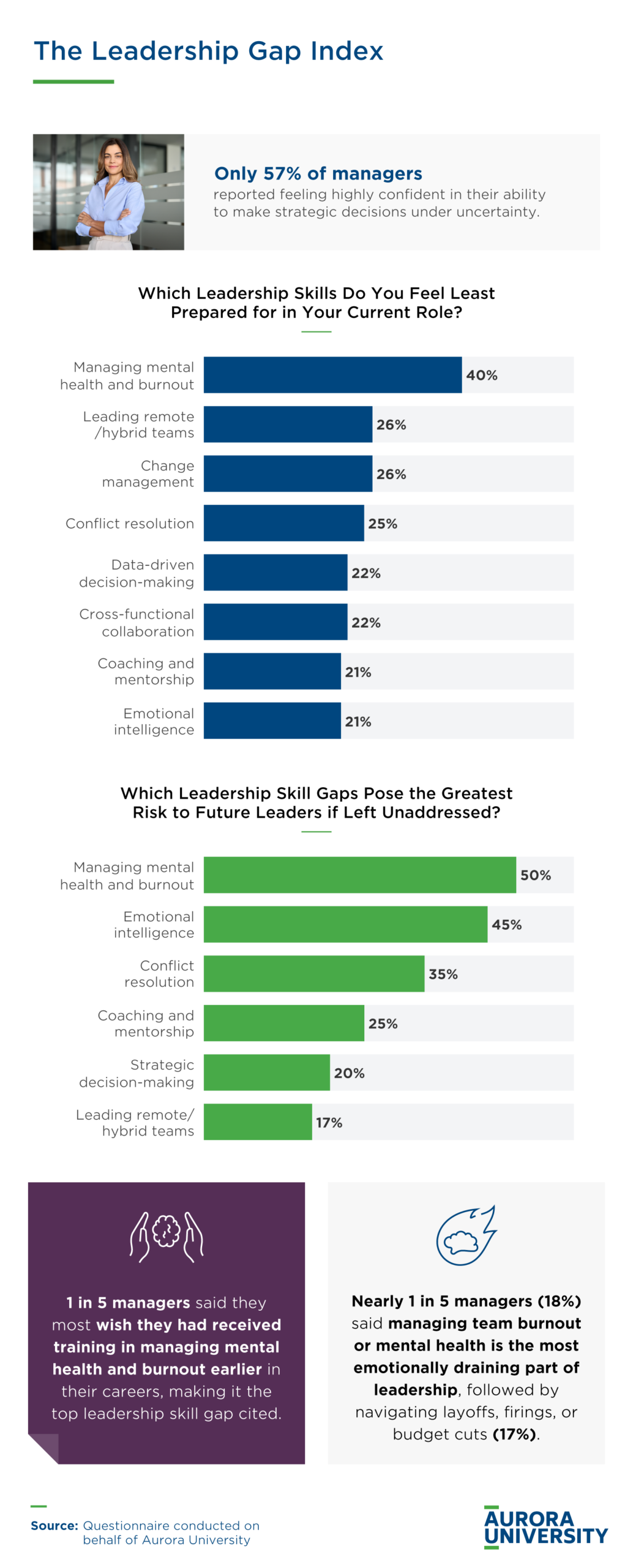
Managers said they felt least prepared to support their teams’ mental health and burnout, with 40% identifying it as their biggest challenge. Nearly one in five managers (18%) said managing burnout or mental health was the most emotionally draining part of their role, followed by navigating layoffs, firings, or budget cuts (17%). When asked which skills were most important for managers today, respondents selected strategic decision-making (54%), coaching and mentorship (44%), emotional intelligence (41%), conflict resolution (39%), delegation (28%), and managing mental health and burnout (20%).
Work setting influenced leadership readiness. Onsite managers (41%) were slightly more likely than remote managers (39%) to feel unprepared to manage burnout and mental health. Remote managers (32%) were more likely than onsite managers (21%) to feel unprepared for change management, and onsite managers (35%) were far more likely to feel unready to lead remote or hybrid teams compared with remote managers (13%).
Managers also identified areas where they are still working to build confidence. Managing mental health and burnout ranked first (15%), followed by conflict resolution (14%) and delegation (13%). These responses reflect ongoing development needs in both interpersonal and operational skills.
How Leadership Training and Development Influence Retention
Many organizations depend on managers to support teams and maintain stability, yet not all provide the development opportunities leaders need to strengthen their skills. Leadership training plays a significant role in shaping how supported managers feel and how long they choose to stay with an employer.
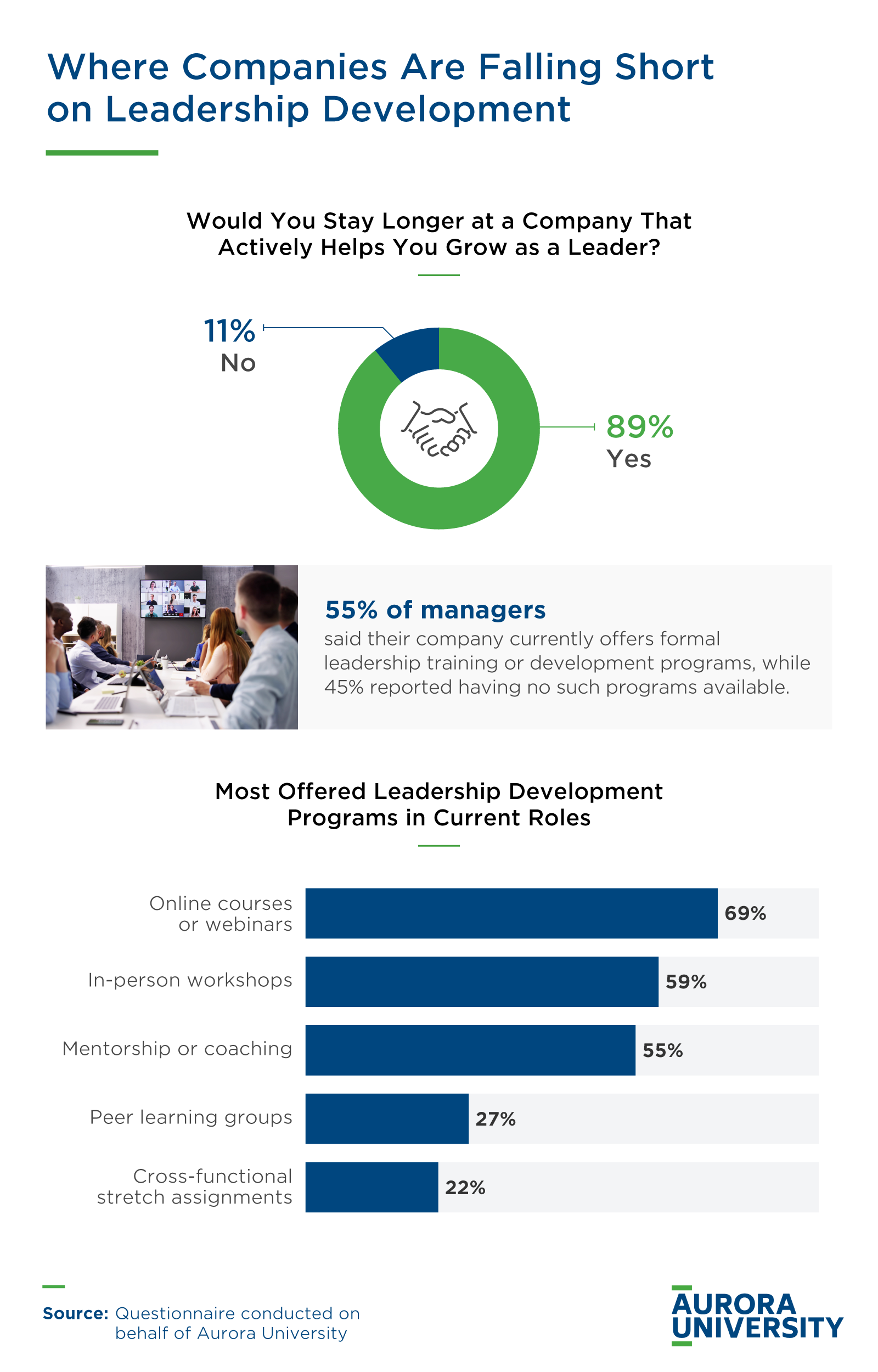
Managers placed high value on leadership development initiatives, with 89% saying they would stay longer at a company that actively supported their growth. However, only 55% of managers said their employer offered formal leadership development or training programs. Without structured mentoring or targeted skill development, many managers lack the support needed to address critical leadership competencies in a rapidly changing work environment.
Training time was also limited. One-third of managers reported receiving only five to 15 hours of leadership training per year. Another 11% said they received fewer than five hours of training annually, with this rate even higher in retail (21%), government and public sector roles (16%), and healthcare (13%).
The Emotional Toll and Emerging Expectations of Leadership Today
Modern leadership requires balancing operational responsibilities with the growing needs of diverse teams. Many managers are navigating roles that demand emotional resilience and adaptability, which can influence how confident and supported they feel in their positions.
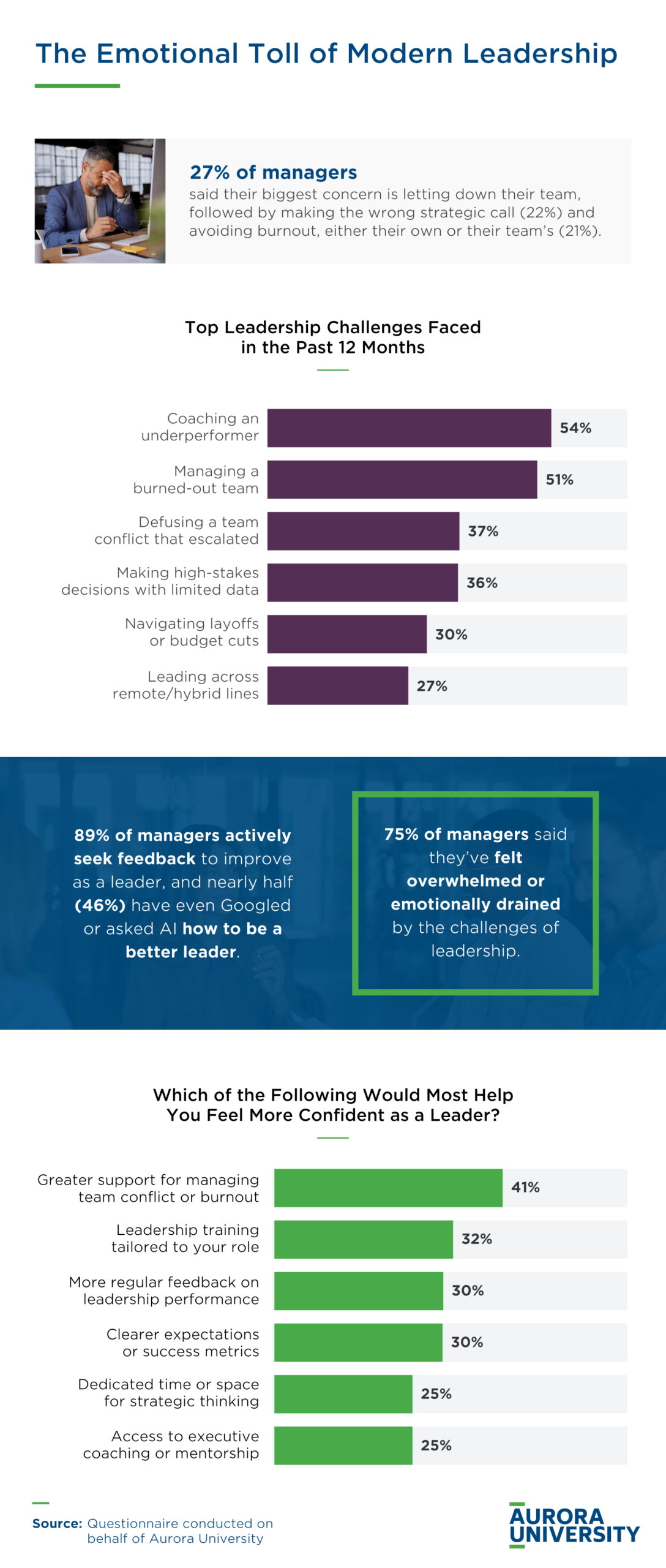
Many managers (75%) reported feeling overwhelmed or emotionally drained by leadership responsibilities. Onsite managers, at 78%, were slightly more likely than remote (74%) and hybrid managers (72%) to share this experience.
Respect from team members also influenced leadership confidence. Nearly one in five managers (19%) said they felt only somewhat or very little respect from their teams, which can affect communication, collaboration, and overall morale. Low perceived respect may also contribute to the emotional strain managers reported.
Looking ahead, managers recognize the importance of emerging competencies. Two-thirds (67%) said AI literacy should be a required skill for future leaders, reflecting a growing awareness that leadership will continue to evolve alongside new technologies.
Managers have also sought external resources to develop stronger leadership skills. Nearly half (46%) said they had Googled or asked AI for guidance on how to improve their leadership abilities. This reliance on outside tools shows how many leaders look beyond their employers for support when formal development opportunities are limited.
Ready to Close Your Leadership Skill Gaps?
Explore ProgramsThe Leadership Upskilling Playbook
Leadership today sits at the intersection of shifting employee expectations, digital transformation, and evolving organizational needs. The questionnaire findings showed that many managers want clearer direction on how to strengthen their skill set and prepare for future leadership roles. This playbook offers a structured way to assess current abilities, identify development priorities, and explore continuing education options that support long-term success.
1. Assess Your Current Leadership Strengths
Start by taking stock of the core competencies that shape effective leadership. Reflecting on both operational and soft skills helps reveal strengths and areas for growth. Rate each using assessment tools or self-reflection:
- Strategic decision-making
- Coaching and mentorship programs
- Emotional intelligence and communication skills
- Conflict resolution
- Delegation
- Managing burnout and mental health
- Change management
- Leading remote, hybrid, or onsite teams
- AI literacy and adaptation to technological advancements
Understanding where you feel confident and where you need new skills helps clarify your priorities and sets the stage for targeted development. Also, consider your business environment. Leadership confidence is heavily influenced by context, such as:
- Team dynamics and levels of open communication
- Organizational goals and expectations from senior leaders
- The pace of disruption and industry-wide change
- Trust, respect, and support from your leadership team
Recognizing how your environment affects daily decisions allows you to identify the areas where development will have the greatest impact on team performance and employee engagement.
2. Strengthen High-impact Leadership Skills
Soft skills are central to organizational success and help leaders build stronger relationships across diverse teams. These abilities support clarity, motivation, and a healthy business environment. Improve your people-centered skills by:
- Requesting and responding to feedback
- Providing coaching that supports employee growth and development
- Communicating constructively during conflict
- Creating an environment that promotes psychological safety
Soft skills also include the ability to support team well-being through thoughtful communication and awareness of workplace demands. Strengthen your ability to support mental health and prevent burnout by:
- Setting realistic expectations and workload boundaries
- Checking in regularly with team members about stressors and support needs
- Modeling healthy work habits and encouraging employees to use available resources
- Recognizing early signs of exhaustion or disengagement
Supporting well-being helps maintain a sustainable work environment and reinforces your team’s trust and engagement. Strengthening soft skills helps leaders build trust, encourage collaboration, and support open communication across their teams.
3. Build Your Leadership Toolkit
Practical routines can help leaders develop new skills consistently over time. Small, intentional actions build momentum and reinforce learning. Consider adopting growth-oriented habits like:
- Weekly reflection on decisions and communication
- Quarterly check-ins with a mentor or trusted peer
- Dedicated time for leadership development programs or micro-learning
Habits like these support a culture of continuous learning and help leaders apply their development in real-world settings. Remember to use digital and external resources wisely. Search engines and AI tools can support learning, especially when leaders need quick examples or frameworks, but they work best when paired with structured learning, continuing education, and mentorship programs.
4. Develop a Long-term Growth Plan
Focusing on a few specific areas at a time helps leaders make meaningful progress. Clear goals guide both daily actions and long-term development. Choose a skill you want to strengthen, determine steps to practice it in your business environment, and use metrics to measure growth over time. This approach ensures that your efforts align with your career paths and support organizational goals.
Continuing education may be the best way forward for you. Aurora University’s online programs help leaders deepen their expertise and prepare for future leadership responsibilities. Continuing education, certificates, and degrees offer structured ways to build new capabilities.
5. Put Your Learning Into Practice
Growth accelerates when leaders use new competencies in everyday situations. Practicing skills in real time helps reinforce confidence and adaptability. Apply new skills consistently in situations such as:
- Team meetings and planning sessions
- Mentorship programs and coaching conversations
- Cross-functional projects and change initiatives
- Guiding high-potential team members
Integrating new approaches into your leadership style helps strengthen team performance and supports the development of future leadership talent across the organization.
Methodology
A questionnaire was conducted among 933 managers on behalf of Aurora University to examine how prepared managers feel to lead in today’s workplace and how companies are supporting their development. All participants held mid-level or senior-level roles and were not associated with AU. Data was collected in November 2025.
Because this was a non-probability, online sample, the results should be considered exploratory and non-scientific and are not intended to represent all U.S. managers. The report is a compilation of national survey findings sourced specifically for AU.
About Aurora University
Aurora University offers a comprehensive array of online degree programs designed to support adult learners at every stage of their academic and professional journeys. Undergraduate options include:
- Business Administration (BS)
- Business Management (BA)
- Criminal Justice (BA)
- General Studies (BA)
- Healthcare Administration (BS)
- Psychology (BA)
- Social Work (BSW)
At the graduate level, Aurora offers multiple fully online options, such as:
- Master of Arts in Educational Leadership with Principal Endorsement (MAEL)
- Master of Business Administration (MBA)
- Master of Public Administration (MPA)
- Master of Social Work (MSW), with traditional and advanced standing tracks
- Master of Science in Exercise Science (MS)
- Doctor of Education (EdD)
Each program is tailored to fit around work and personal commitments and is taught by practitioner-based faculty who bring real-world expertise to the virtual classroom. Aurora University delivers a personalized, student-first experience that reflects its supportive small-college environment.
Fair Use Statement
This content may be shared for noncommercial purposes only. If you reference or redistribute this material, please include a link citing Aurora University as the original source.